

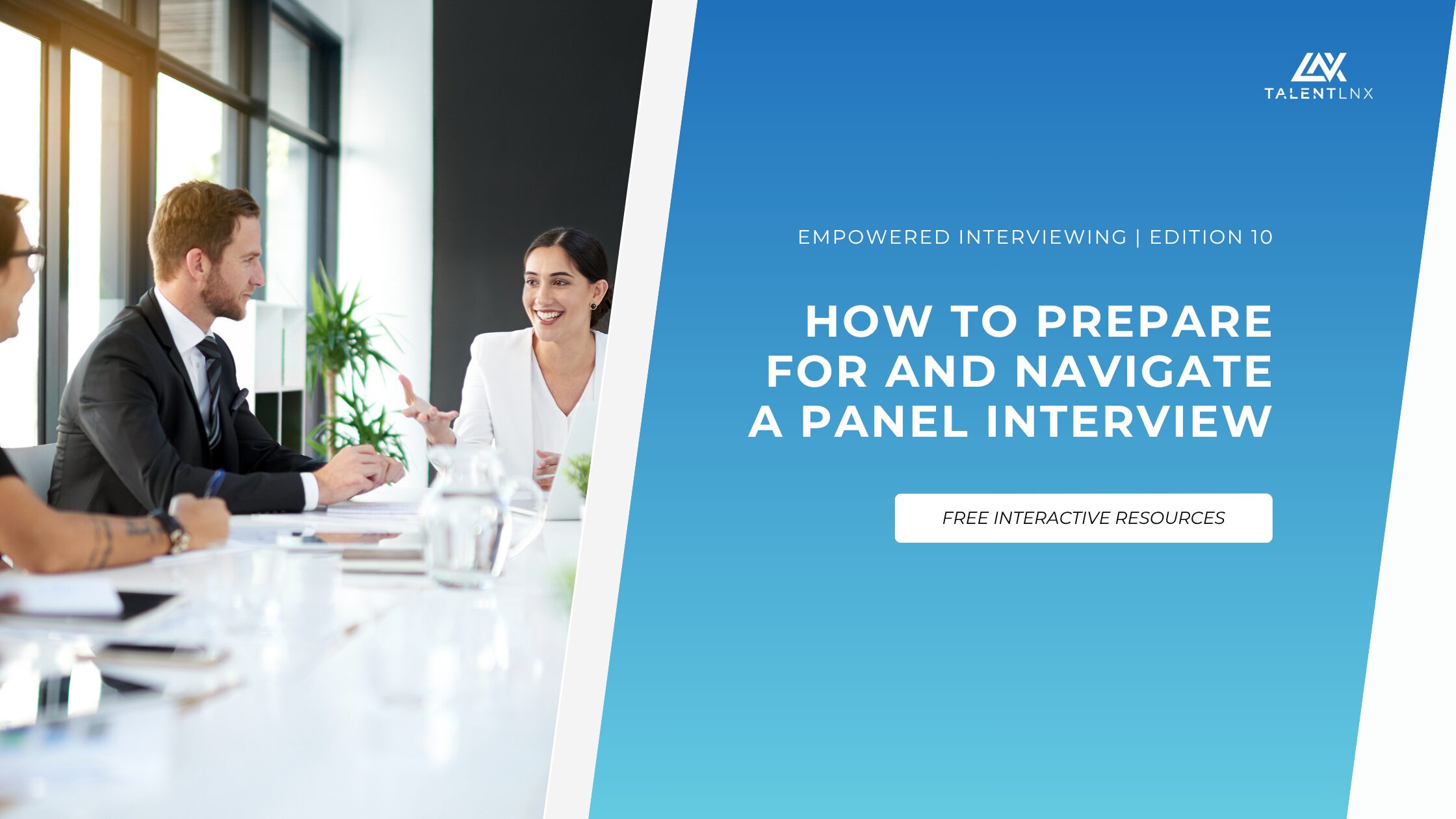
If you have been in a panel interview you know there is a specific kind of reflection that happens afterward.
Not just how did my answers land. How did I land with the room. The person who asked the most questions. The one who nodded along. The one who stayed quiet the entire time. The one whose reaction you walked out still thinking about.
A panel interview is a different conversation from any other round in the process. And the preparation that serves you in it is different too. That is what this edition is about.
The Midweek Check-In
Before we get into the framework, let us take a moment to pause and think through three questions honestly.
- Think about the last panel interview you had or the one coming up. Did you prepare differently for it than you did for the one-on-one rounds before it? Not just your answers. The room itself. The people in it. What each of them might be listening for.
- When you answer a question in a panel setting, who are you actually talking to? The person who asked it? The whole room? Take a moment to think about where your attention naturally lands when you are in that conversation. That is worth knowing before you walk in again.
- Have you ever walked out of a panel and realized you spent most of your energy speaking to the people who asked the most questions? Think about the ones who did not. What do you think they took away from the conversation?
Your Free Resources This Week
The Panel Prep Planner walks you through every person on the invite before the conversation happens. Their role, what they are likely evaluating, and what you want each of them to walk away knowing about you. The Virtual Panel Playbook covers everything that is specific to preparing for a panel interview on video.
→ Open the Virtual Panel Playbook
The tools are free. Enter your first name, last name, and email to access.
What the Panel Is Actually Asking of You
A panel interview is one of the few moments in the hiring process where you can make an impression on multiple decision makers at the same time.
Each person in that room sees the role through a different lens. The hiring manager is thinking about the work. The peer is thinking about the team dynamic. The senior leader is thinking about the bigger picture. And each one is forming an impression of you simultaneously based on what matters most to their specific stake in this hire.
What that creates for you is a genuine opportunity. In one conversation you have the chance to connect with people who each care about something different and demonstrate that you can speak authentically to all of them. That is something a one-on-one interview rarely gives you the space to show.
Understanding that before you walk in is what changes how you prepare for it and how you show up when it matters.
Five Ways to Show Up Differently in a Panel Interview
1. Research Every Person on the Invite Before You Walk In or Log On
A panel brings multiple people into one conversation and each of them is bringing a different perspective based on their role and their stake in this hire.
Taking time on LinkedIn to review each panelist before you walk in or log on changes the entire preparation. What is their role? What does their team depend on from the person in this position? What are they most likely thinking about when they walk in? Having a sense of those answers means you can speak to each of them in a way that feels specific and genuine rather than general.
2. Answer to the Room, Not Just the Person Who Asked
In a one-on-one interview the person who asks is also the person you answer to. In a panel they are the starting point.
Whether you are in a conference room or on a video call a strong panel answer acknowledges the person who asked, delivers the substance with eye contact that moves naturally across the room or the screen, and finds a way to connect back to someone else before you finish. That pattern keeps every person in the conversation feeling engaged rather than watching from the outside.
3. Find the Quiet One and Speak to Them
Every panel has someone who asks fewer questions and says less. On-site you can see them clearly. Virtually they may have their camera on but their energy pulled back.
That person is often thinking deeply about what you are saying. Finding a natural moment to speak to what they might be thinking, even before they ask, is one of the most meaningful things you can do in a panel setting. It shows awareness. And it tends to matter more than most professionals realize when the room reconvenes after you leave.
4. Understand What Changes Between On-Site and Virtual
An on-site panel interview gives you the full room. Physical positioning matters. Arriving early enough to choose a seat where you can see every panelist without turning your back to anyone changes how the conversation flows. You can read body language, energy, and the moments between panelists that tell you how things are landing in real time.
A virtual panel introduces a specific dynamic. Looking at faces on the screen feels natural but registers as looking away to the people watching you. Looking directly at the camera creates eye contact but means looking away from the faces you want to read. Placing a small visual cue near your camera lens and spending a few minutes practicing key moments directly to it makes a meaningful difference in how your presence comes through on video.
5. Close in a Way That Shows You Were Listening to Everyone
The most effective panel close references something specific you heard from more than one person in the conversation. Not a summary of your own answers. A synthesis of what the room shared with you.
Whether you are closing in person or on screen the move is the same. “Based on what you raised about coordination and what came up earlier around the speed of change in this function, here is what I want to leave you with.” That close demonstrates you were present with the full room not just the person in front of you. And it is the kind of moment people remember when the conversation is over.
A Few Situations Worth Being Ready For
Panel interviews have moments that are worth thinking through before they arrive. Here is how to approach the ones that come up most often.
When some panelists are on camera and others are not. In a virtual panel it is common for some participants to join with video and others without. Treat every name on your screen as an active part of the conversation regardless of whether you can see them. Speak to the full call. Reference names when you can. The energy you bring to a black screen says something about how you show up when you cannot see the reaction you are getting.
When nobody responds immediately after you answer and the room goes quiet. Silence in a panel feels different than silence in a one-on-one. With multiple people in the room it can feel like the whole conversation has shifted. A brief comfortable pause after you finish speaking gives the panel time to process and often prompts a follow up that moves things forward naturally. The candidate who sits comfortably in that silence reads as grounded. That is a strong impression to leave.
When a question invites you to speak to a specific part of your background. Some questions in a panel are an invitation to go deeper on something the room wants to understand better. When that happens address it directly and specifically. A clear honest answer that connects to a real example is always the strongest response. And moving forward from it with confidence rather than lingering on it is what keeps the conversation feeling natural.
Your Strategy Through Friday
If you have a panel interview scheduled this week or next
Open the Panel Prep Planner before anything else. Work through every person on the invite. Their role, their function, what they are most likely thinking about, and one question you want to make sure lands with them specifically. Then think through how you want to close. Not a general summary of why you are the right person. A synthesis of what you expect the room to care most about. Having that clarity before you walk in changes how the whole conversation feels.
If you are actively searching and panels are part of your process
Think about the last panel interview you were in and who you felt most connected to during the conversation. Now think about the people you felt less connected to. That reflection tells you something useful. The adjustment is usually simpler than it seems. Broadening where your eye contact lands and finding a moment to connect an answer back to someone who has not spoken recently is often all it takes to bring the full room with you.
If you are earlier in your search and have not had a panel yet
A panel interview rewards preparation that goes beyond having strong answers. Thinking now about how you would hold the attention of multiple people simultaneously, how you would close in a way that shows you were listening to everyone, and what you would do differently on video versus in person gives you a meaningful head start before the format ever shows up in your process. The Virtual Panel Playbook is a good place to begin building that foundation.
The Midweek Mindset
Holding a room is not a skill you develop in an interview.
It is something every professional builds over the course of a career. Every meeting where you spoke to people with different priorities. Every conversation where you had to bring multiple perspectives together. Every moment where you found a way to make everyone in the room feel like they were heard.
A panel interview is simply the moment that skill gets evaluated most directly.
LinkedIn | TikTok | Instagram | Facebook | Website | X (Twitter) | Job Board