

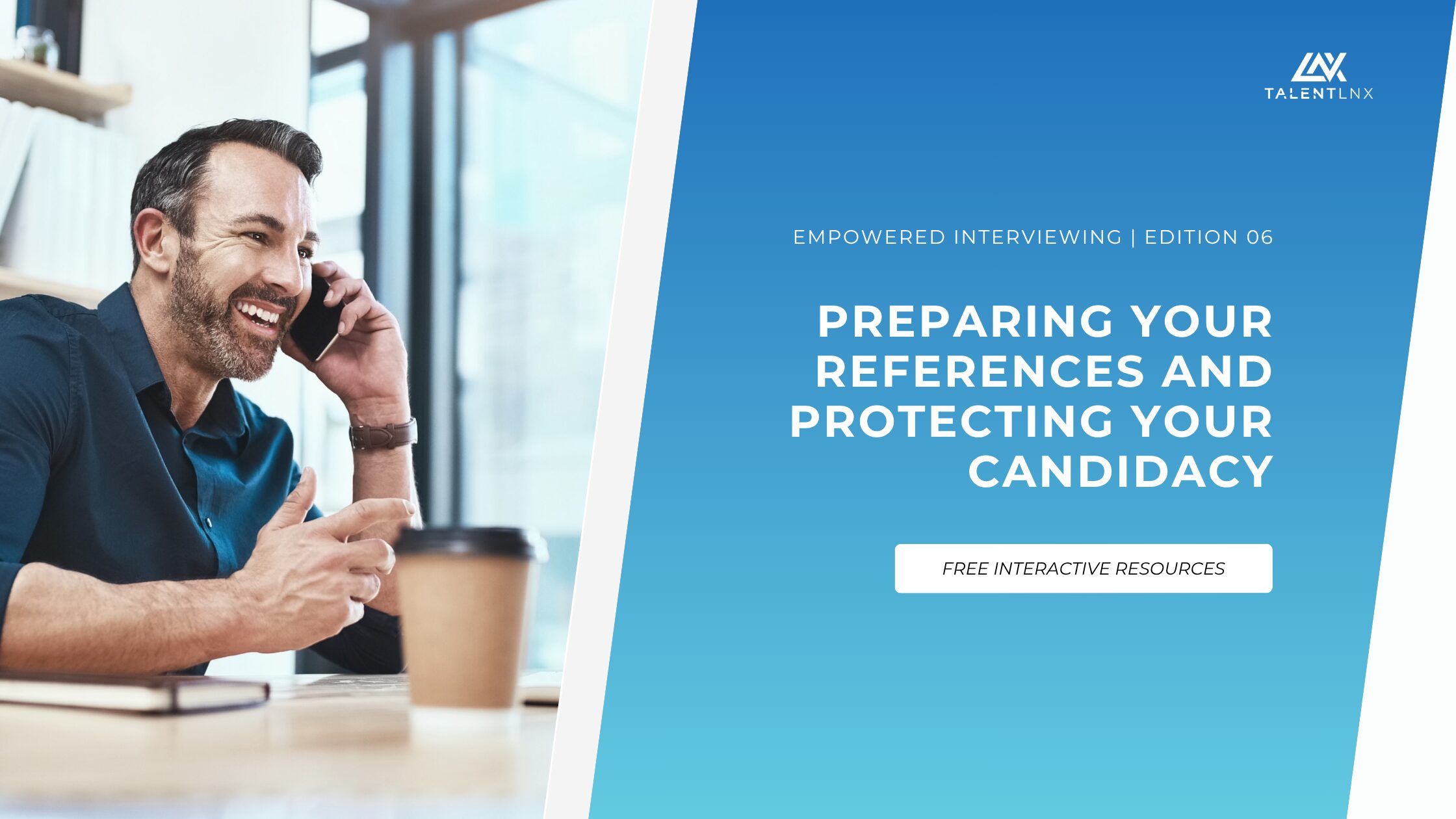
The reference check as most professionals know it no longer exists.
Three names. A call at the end of the process. A box that gets checked before an offer goes out.
In 2026 it looks different. References are being requested earlier. Mutual connections are being reached out to informally before next rounds are scheduled. The conversation about who you are as a professional is happening in more places and at more stages than most people realize.
The professionals who recognize that are treating this part of the process for what it actually is. Not a formality. An opportunity.
That is what this edition is about.
The Midweek Check-In
Before we get into the framework, let us take a moment to pause and think through three questions honestly.
Think about the last time you were asked for references. What did you do between sending those names and the call happening? That gap between providing a name and the conversation that follows is where this edition lives.
When you think about the people on your reference list right now, can you say with confidence that each one knows what you are working toward, what kind of roles you are pursuing, and what you would want them to speak to if someone called today? Not from a conversation six months ago. Right now.
Have you thought about who outside your formal reference list might already be speaking to your work? A mutual connection at an organization you are pursuing. A former colleague who knows someone on the hiring team. In 2026 those informal conversations are happening more than most professionals realize and they are worth thinking about.
Your Free Resources This Week
These tools are designed to support and guide your professional journey and are provided for informational purposes only. Individual experiences, circumstances, and outcomes will vary.
If you want to make sure your references are set up to represent you at your best, the Reference Briefing Builder below walks you through exactly what to share with each reference before the call happens. Once you have that, the Reference Strategy Planner helps you think through who belongs on your list for the specific role you are pursuing and what each person is best positioned to speak to.
→ Brief My References the Right Way
The tools are free. Enter your first name, last name, and email to access.
What Happens After You Send Those Three Names
There is a version of you that exists in the minds of everyone you have ever worked with.
It is built from the meetings you showed up to, the way you handled difficult moments, the things you said when the pressure was on, and the way you made people feel when the work got hard. That version of you has been forming for years without you having any say in it.
What you do have a say in is how clearly the people who hold that version of you can communicate it when someone asks.
Most professionals think of a reference as someone who will vouch for them. The shift is understanding that a reference is someone who is telling your professional story to a hiring team that has no other way to hear it. The difference between a reference who vouches and a reference who tells your story specifically, contextually, and in a way that directly addresses what the hiring team is evaluating is not about who likes you more. It is about who has been given what they need to represent you well.
That is entirely within your control. And it is almost universally overlooked.
Five Things Worth Knowing Before Your References Get The Call
1. Choose References for the Role, Not Just for the Relationship
The strongest reference is not always the person who knows you best or will speak most enthusiastically about you. It is the person who can speak from firsthand experience to what this specific role requires.
Think about what the organization is evaluating and work backward. A role that requires leading a team through significant change needs a reference who watched you do that. A role that requires managing upward through a complex organization needs a reference who saw you navigate that dynamic. Enthusiasm without specificity is less useful than a more measured reference who can speak directly to exactly what the hiring team is trying to assess.
2. Brief Your References Before the Call Happens
Telling your reference to expect a call is not a briefing. A real briefing gives them three things before the conversation happens.
What the role requires and why you are pursuing it. The one or two aspects of your background you most want them to speak to. And the specific context that connects your work together to this opportunity.
The difference between a reference who says “she was a fantastic leader” and one who says “the work she did on the consolidation project in 2022 is directly relevant to what this role requires and here is why” is almost entirely in the preparation that happened before the call.
3. Prepare Them for the Questions They Are Likely to Be Asked
Experienced hiring teams ask references about more than your strengths. They ask about your most significant challenge. How you handle pressure. What you are still developing. A reference who has thought through their honest answer to those questions in advance will give a more composed and more credible response than one who is caught off guard.
You are not coaching them on what to say. You are giving them the courtesy of not being surprised by the conversation.
4. Think Beyond Your Formal Reference List
Backdoor references through mutual connections are more common than most professionals realize. Before a company moves to the next round, someone in the organization may already be reaching out to people in their network who know your work.
That is not a reason to worry. It is a reason to be intentional about how you show up professionally across every relationship in your network. The connections who can speak well to your work are part of your reference story whether you have formally listed them or not.
5. Follow Up With Your References After the Process
Your references are doing you a significant favor. A brief note or call after the process, whether you get the role or not, maintains the relationship and gives you the chance to understand what was asked and what they communicated.
That information is valuable for future processes. And the gesture itself says something about the kind of professional you are.
Some reference situations require a little more thought. Here is how to approach the ones that come up most often.
Your most relevant reference is your current employer who does not know you are searching. This is one of the most common challenges at the senior level. Be transparent about it.
“My most recent manager is not currently aware that I am exploring other opportunities. I would prefer to have that conversation at the point where we have a clear mutual interest and I am happy to provide additional references from earlier in my career who can speak to my work in depth.”
Most organizations understand and will accept that.
You are asked for more references than you have ready. Some organizations request four, five, or even six. If your list feels thin think beyond direct managers. A peer who worked alongside you closely, a direct report who can speak to your leadership, or a key stakeholder from a significant project are all valid references when framed correctly.
“I want to make sure I am giving you references who can speak specifically to different dimensions of my work. Here is who I would suggest and what each person is best positioned to speak to.”
That framing turns a potential gap into a demonstration of self awareness.
Your strongest reference for this specific opportunity is from earlier in your career. A reference from five or six years ago can still be incredibly powerful when framed correctly.
“I want to give you some context on this reference. Although we worked together a few years ago the work we did during that time is directly relevant to what this role requires and they are best positioned to speak to that specific experience.”
That framing gives the hiring team confidence in the reference before the call even happens.
Your Strategy Through Friday
If you are actively interviewing and references have been requested or are coming up soon
Reach out to each person on your list before any calls happen. Not to tell them a call is coming. To have a real conversation about the role, what it requires, and what you would want them to speak to. That conversation changes everything that follows.
If you are actively searching but have not been asked for references yet
This is the right time to update your references on where you are in your search. A reference who already knows what you are pursuing is in a much stronger position when the call does come. A brief conversation now means one less thing to manage under pressure later.
If you are earlier in your search or building your pipeline
Think about who in your network can speak most specifically to the work you do and where you are headed. Think about who has connections at the organizations you are most interested in. Building that awareness now means you are never scrambling to pull a list together when someone asks for it.
The Midweek Mindset
Every professional has people in their network who would go to bat for them without hesitation. People who have seen them at their best, worked through hard problems alongside them, and know firsthand what they bring to the work.
The question is not whether those people exist. It is whether they are equipped to say the right things at the right moment.
That is the part of the hiring process most professionals leave entirely to chance. And it is also the part most entirely within your control.
Your network is one of the most powerful things you have built in your career. This is one of the moments it matters most.
LinkedIn | TikTok | Instagram | Facebook | Website | X (Twitter) | Job Board