


What Recruiters Search for on LinkedIn (and How to Be Found)
Your LinkedIn profile is not only read. It is searched.
Somewhere today, a recruiter will type a job title, a few skills, and a location into a search bar, and a list of names will come back. “Prior authorization” + “specialty pharmacy” + “remote.”
No cover letter. No introduction. Just the words on your profile, matched against the words in that search.
For many roles, that search is where the hiring conversation begins, often before a posting has had time to collect applications. The professionals who appear in it, and whose profiles make sense in a few seconds, tend to be the ones who hear about an opportunity first.
The encouraging part is that the words recruiters search for are words you already use to describe your work. Being found mostly comes down to placing them in the parts of your profile a search reads first.
That is what this edition is about.
The Midweek Check-In
Before we get into the framework, let us take a moment to pause and think through three questions honestly.
If a recruiter were searching for the exact role you want next, what words would they type? Most of us write our profiles as a record of where we have been. A search starts from the other direction, with the role someone needs to fill, and works backward to the people who match it.
When did you last read your headline the way a stranger would? In a list of search results, it sits right under your name, and for many recruiters it is the line that earns a closer look. A few words that clearly name what you do can carry more weight than a full page of experience below them.
How would a colleague describe what you do in a single sentence? The words other people use for your work are often the words a recruiter types, and some of them may not appear on your profile yet.
What Happens Inside a Recruiter Search
A recruiter search tends to combine a handful of things: job titles, skills and keywords, location, years of experience, and whether someone has signaled they are open to new roles. The results come back as a list, and each person is represented by very little: a name, a photo, a headline, a current title, and a location.
For many recruiters, that short list of details shapes which profiles get opened. They often scan dozens of results and open only a few, choosing the profiles that clearly match the role in front of them.
Titles matter more than many people expect, because the same work goes by many names. A recruiter filling a prior authorization role, the work of getting insurance approval before a medication or procedure is covered, may search for Prior Authorization Specialist, Benefits Verification Specialist, Reimbursement Specialist, and Access Specialist all at once. A profile that uses only an internal title, like Access Coordinator II, can be a strong match and still not appear.
Here is how two headlines for the same professional might look in those results.
A general headline: “Healthcare Professional | Passionate About Helping Patients”
A specific headline: “Prior Authorization and Benefits Verification Specialist | Specialty Pharmacy | Oncology and Rheumatology”
Both are sincere, and the first reflects something true about the person. The second simply speaks the language of the search. It contains the titles a recruiter is likely to type, it names the setting, and it tells them in one line why this profile belongs on their short list.
How to Make Sure the Right Recruiters Find You
You do not need to rebuild your profile. These five steps focus on the places a recruiter search looks first.
1. Your Job Title
Recruiters find people by typing a job title into LinkedIn search. Many companies use internal titles, like Access Coordinator II, that a recruiter would not think to search for.
So keep your official title, and add the one most companies use for the same work, the title you see on most job postings like yours. An Access Coordinator II, for example, might add “Prior Authorization Specialist” to their headline.
LinkedIn’s guide: Manage your profile Experience section
2. Your Headline
A strong headline does three things: it names your role, your specialty, and your setting. “Revenue Cycle Analyst | Hospital Billing and Denials Management | Epic” tells a recruiter exactly where you fit before they open your profile.
If you are interviewing for leadership roles, include the scope you lead, such as team size or the functions you oversee. If you are earlier in your career, name the role you are building toward alongside the experience you have now.
LinkedIn’s guide: Edit your headline
3. Your Skills and Systems
Recruiters often search for specific skills, systems, and certifications. Add them to your skills section, and mention them naturally in your experience descriptions as well, where they carry context. Systems and credentials are especially useful in healthcare and pharmacy, where a recruiter may search for a specific platform or license before anything else.
LinkedIn’s guide: Add and remove skills on your profile
4. Your Location and Work Preferences
Location is one of the first filters many recruiters apply. Make sure your profile reflects where you live and the kinds of work arrangements you are open to, whether that is remote, hybrid, on site, or open to relocating. An outdated location can filter you out of a search you would be a great fit for.
LinkedIn’s guide: Change the location on your profile
5. Your Open to Work Setting
If you are open to new opportunities, say so in the way that fits your situation. The recruiters only setting shares your interest with recruiters using LinkedIn’s hiring tools, and LinkedIn takes steps to keep it from recruiters at your current company. Add the job titles and locations you are interested in, so the right searches bring you forward.
LinkedIn’s guide: Let recruiters know you’re Open to Work
Your Free Resources This Week
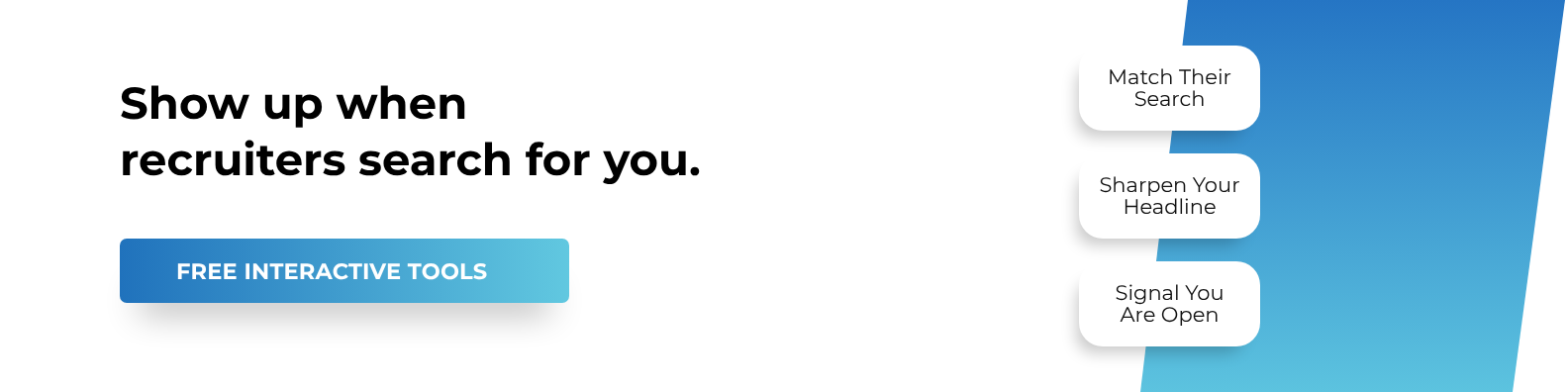
If you want your profile to show up in the searches that matter for your next role, the two tools below are a good place to start.
The Recruiter Search Scorecard helps you see your profile the way a recruiter search does. Because the profile you see and the profile a search reads are often not the same.
The Headline Builder walks you through writing the one line recruiters read first, so it names your role, your specialty, and your setting clearly. Not a slogan. A headline that works in a list of search results.
The tools are free. Enter your first name, last name, and email to access.
A Few Situations Worth Thinking Through
Every profile starts from a different place. Here is how to approach the ones that come up most often.
When your title is unique to your company. Keep your official title in the title field, then add the common market title in your headline or the first line of that role. “Access Coordinator II (Prior Authorization and Benefits Verification)” keeps it accurate and searchable at the same time.
When you are changing direction. Lead your headline with where you are going, supported by what you bring. “Aspiring Clinical Documentation Specialist | RN With Eight Years in Acute Care” tells a recruiter both the destination and the foundation.
When you are currently employed and want to stay discreet. Use the recruiters only setting, and focus your updates on your headline, skills, and experience. Those changes read as a professional keeping their profile current, which is exactly what they are.
When you are early in your career. Name the role you are pursuing and the skills you already have, including certifications, internships, and coursework. Recruiters searching for emerging talent often look for exactly that combination.
The Midweek Mindset
Every week, someone is looking for exactly what you do. Whether they find you often depends on a handful of words.
The professionals recruiters reach out to are often the ones whose profiles describe their experience in the same words a recruiter is already using. Clarity, more than self promotion, is what brings them to your name.
So the work is not to reinvent your career on a page. It is to translate it into the language a search understands, and to let the people who are looking for you know where to find you.
Your experience is already there. Give the search the words to find it.
Empowered Interviewing is published by TalentLNX, a recruiting and workforce solutions firm specializing in healthcare and pharmacy. With more than 25 years of experience on both sides of the hiring process, our team supports professionals at every stage of their career.
Exploring your next opportunity? Browse our current open roles.
LinkedIn | TikTok | Instagram | Facebook | Website | X (Twitter) | Job Board